
How to Make a Kitchen Feel Warmer: A Designer’s Perspective
“My kitchen is beautiful, but it still feels a little cold.”
We hear that often in early conversations with clients.
A kitchen can be functional, modern, and finished with quality materials, yet still feel somewhat impersonal. When that happens, the cause is rarely one obvious design flaw. It usually comes down to several smaller choices that, together, shape the atmosphere of the room.
Here’s how we typically approach that kind of transformation.
Before: everything feels too uniform
Kitchens that feel cold often lack depth.
The cabinetry, countertops, backsplash, and walls may all sit within the same narrow family of colours and textures. The result can look clean and polished, but also a little flat.
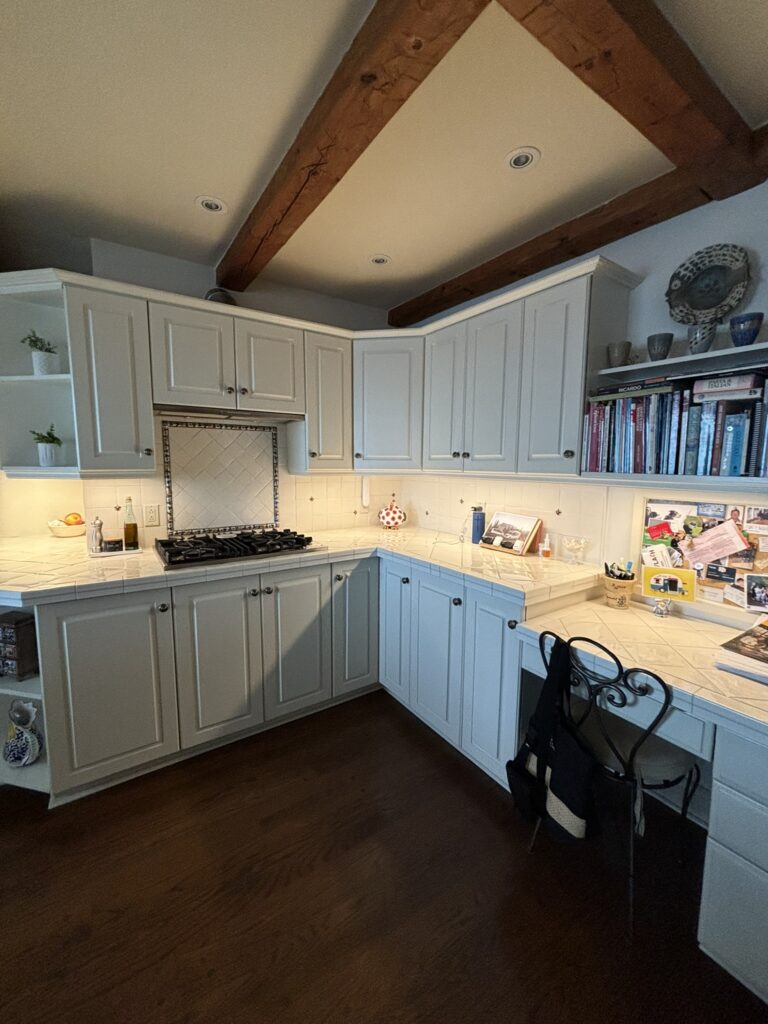
Beaconsfield Project, before image.
After: introduce subtle contrast
A warmer space often starts with more visual layering.
A natural wood tone, a stone-inspired texture, or a few matte finishes can add depth without making the kitchen feel busy. Once different surfaces begin to interact, the room usually feels more inviting and more considered.
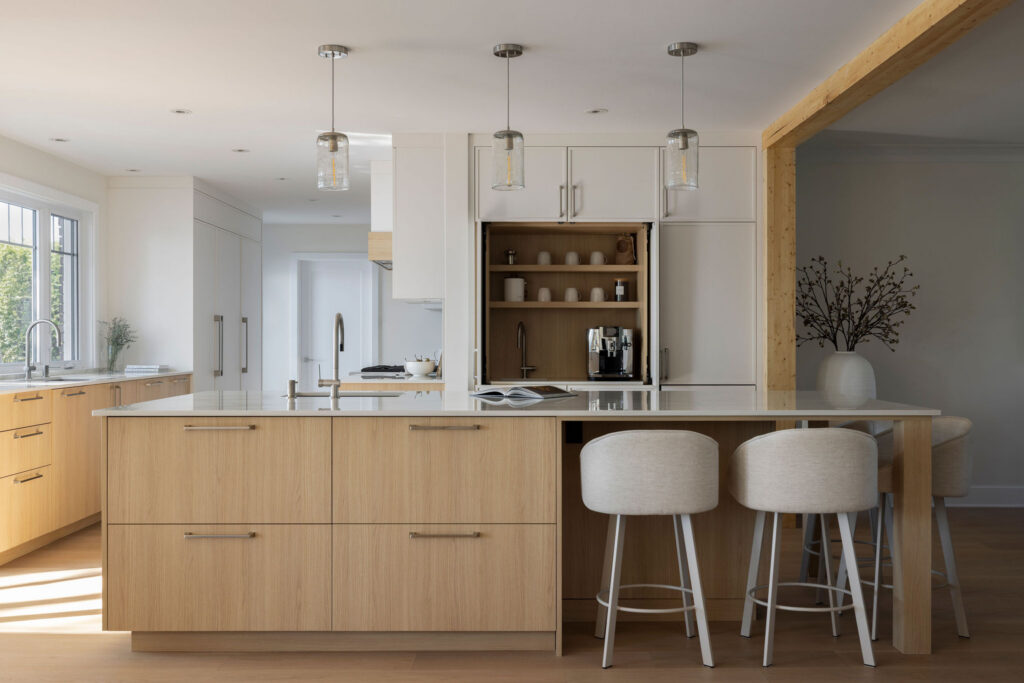
Beaconsfield Project, after image.
Before: each material looks good on its own
It’s entirely possible to choose several beautiful materials and still end up with a kitchen that feels disconnected.
A very contemporary stone, a rustic wood, and industrial hardware may each have their own appeal, but together they can pull the room in different directions.
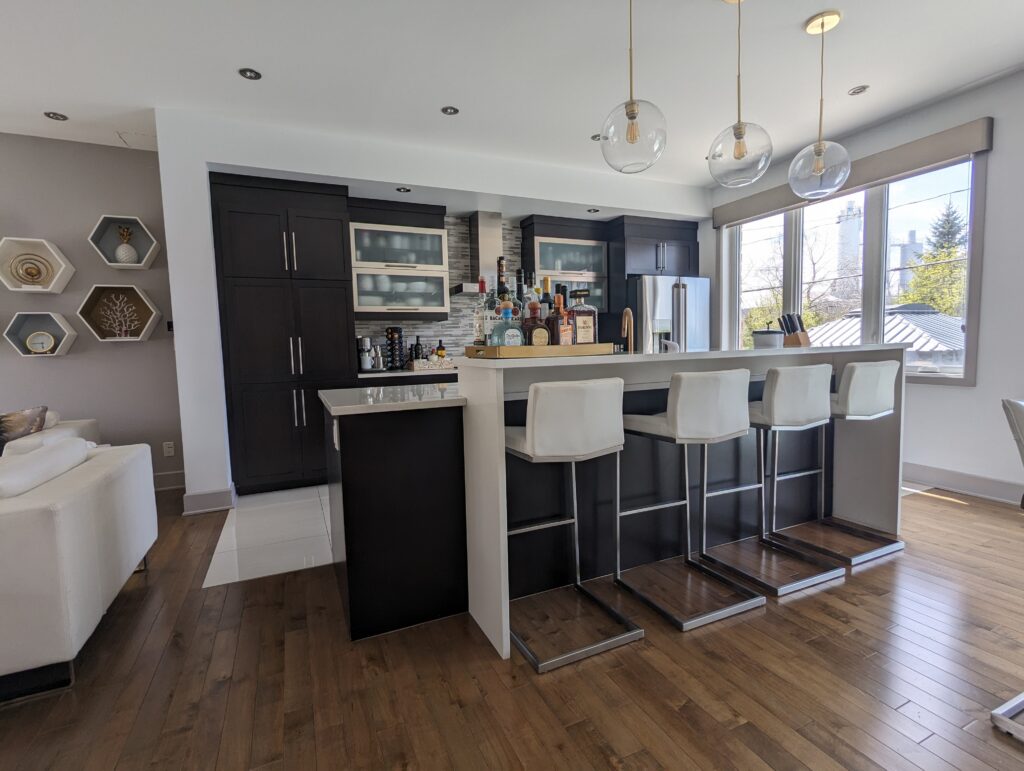
La Prairie Project, before photo.
After: build a material palette that works together
The strongest combinations have a sense of continuity.
We often build the palette around a few complementary roles: wood to bring warmth, a mineral surface to add refinement, and metal accents to introduce contrast.
When the materials support one another, the kitchen feels calmer, more cohesive, and more intentional.
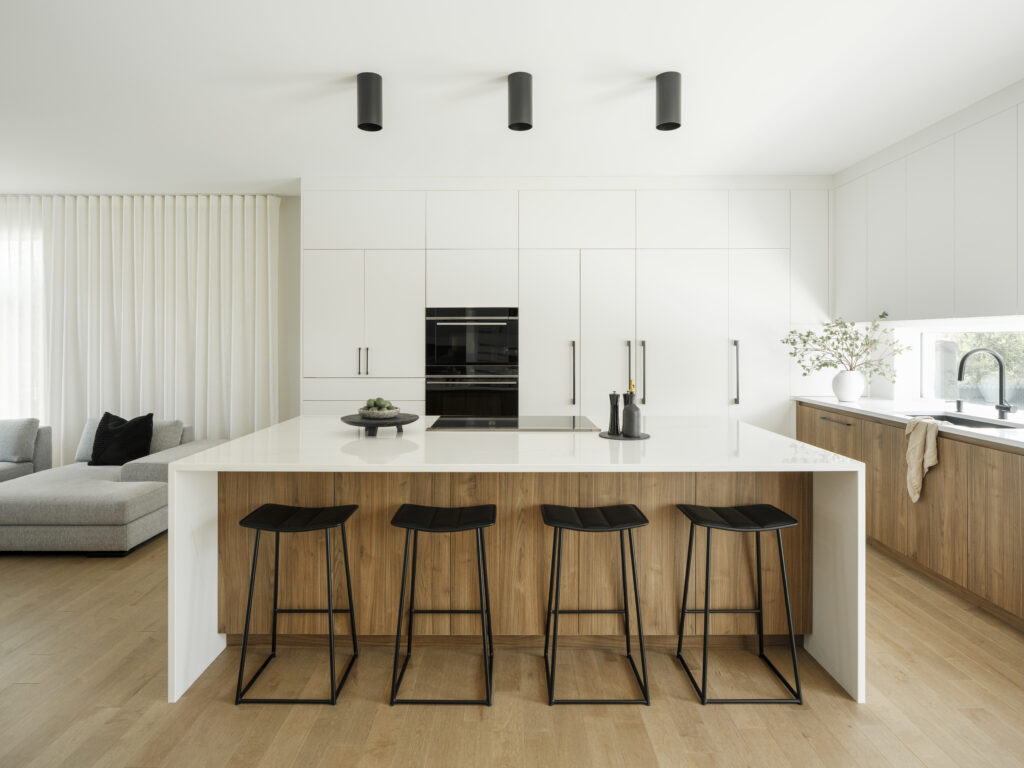
La Prairie Project, after image.
Before: lighting is purely functional
A lot of kitchens are lit with one priority in mind: visibility.
Of course, that matters. But relying on functional lighting alone can leave the room feeling flat, especially in the evening.
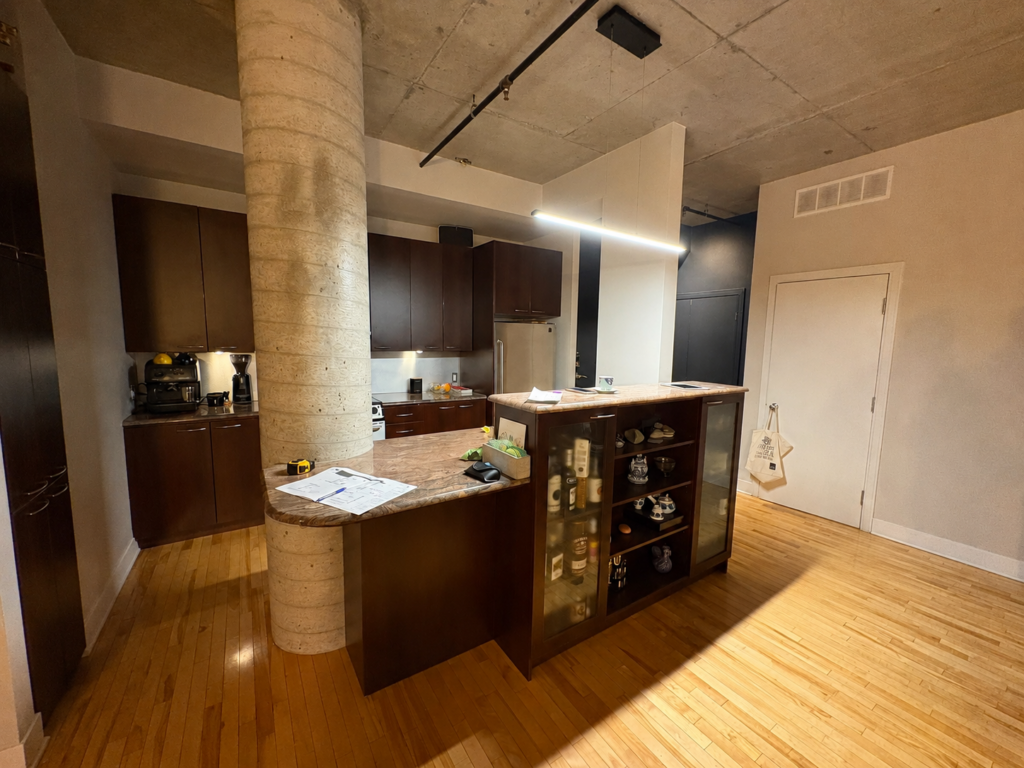
Old Montreal Project, before photo.
After: use lighting to shape the atmosphere
One of the first things we look at is how light moves through the space.
Good general lighting creates the foundation, while additional sources can add depth and create different moods throughout the day. Under-cabinet lighting, pendants, integrated lighting, and softer ambient sources all have a role to play.
The goal is to make the kitchen feel comfortable at different times of day, from meal prep to a quieter evening at the island.
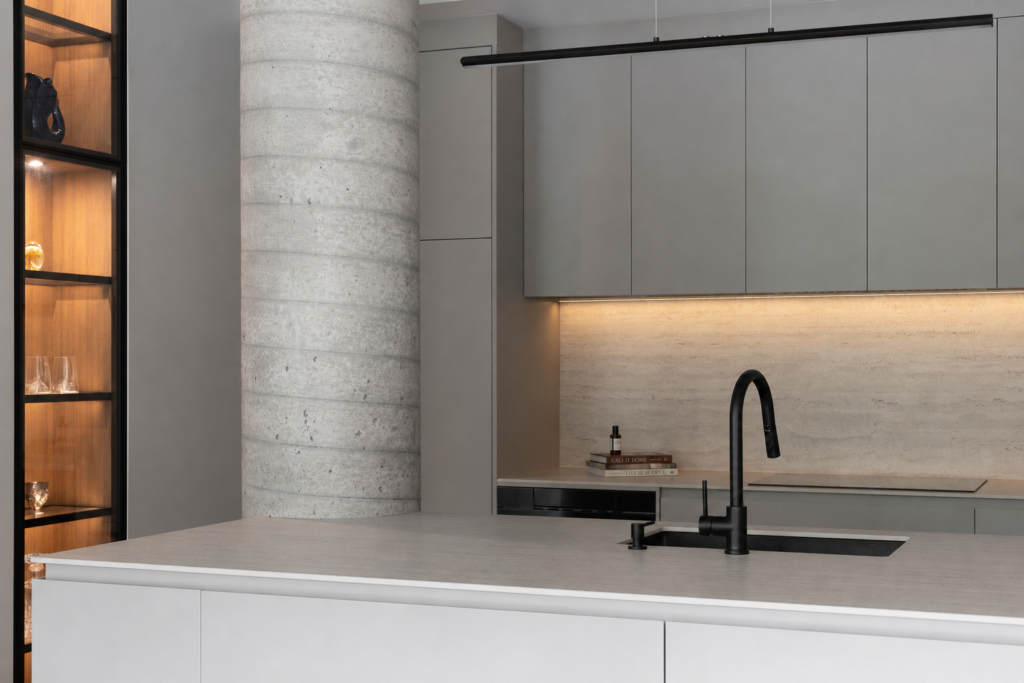
Old Montreal Project, after image.
Before: one trend dominates the whole room
It’s easy to build a project around a colour, finish, or look that feels exciting in the moment. The challenge comes later, especially when that choice is difficult to update.
After: use trends in places that can evolve
We usually prefer to establish a more enduring foundation and bring current ideas into smaller elements.
Lighting, hardware, accessories, and decorative details are easier to change over time, which gives the kitchen more flexibility as tastes evolve.
That approach also makes it easier to refresh the room without reworking the entire design.
Before: warmth is treated as a colour problem
Warm greiges, beiges and taupes can absolutely help make a kitchen feel more inviting.
They’re only one part of the picture.
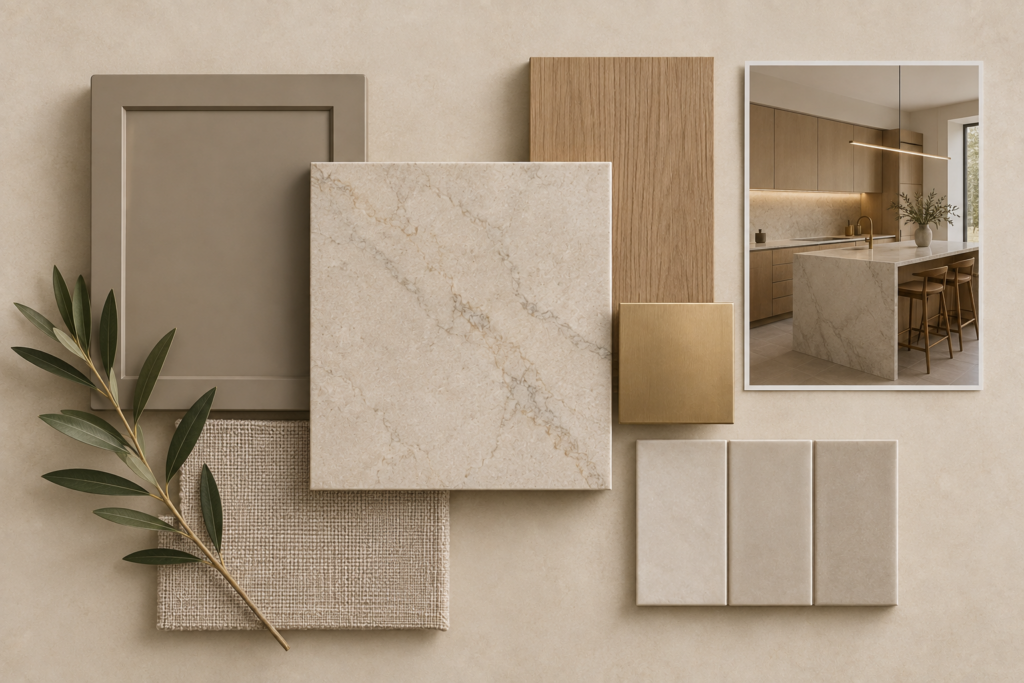
After: work with texture, proportion and light
Warmth often comes from the way several details interact.
Wood brings a tactile, natural quality. Textured materials add relief. Balanced proportions make the room feel settled. Light changes how those surfaces are perceived throughout the day.
Those details are what give a kitchen character and make the atmosphere feel more comfortable and lived in.
Warmth is built into the details
A warm kitchen usually comes together through a series of deliberate choices: materials that complement one another, lighting with more than one purpose, well-judged contrast and a foundation that can age gracefully.
As kitchen design professionals, that balance is what we look for in every project. The aim is to create a space that feels welcoming, elegant, and comfortable to live with for years.
In the end, warmth comes from how the whole room works together.