
How to Choose the Right Materials for a Kitchen That Lasts
A conversation with Emma
There’s one question that comes up in almost every first meeting with a client:
“What material do you recommend?”
My answer often surprises people.
Before talking about quartz, laminate, wood, or finishes, I want to understand how the kitchen will actually be used.
The durability of a kitchen depends heavily on how well its materials suit the people living with them every day. Choosing those materials is one of the most important decisions in a renovation, with a direct impact on maintenance, comfort, and how well the space holds up over time.
These are some of the questions I usually explore with clients before we start narrowing down the options.
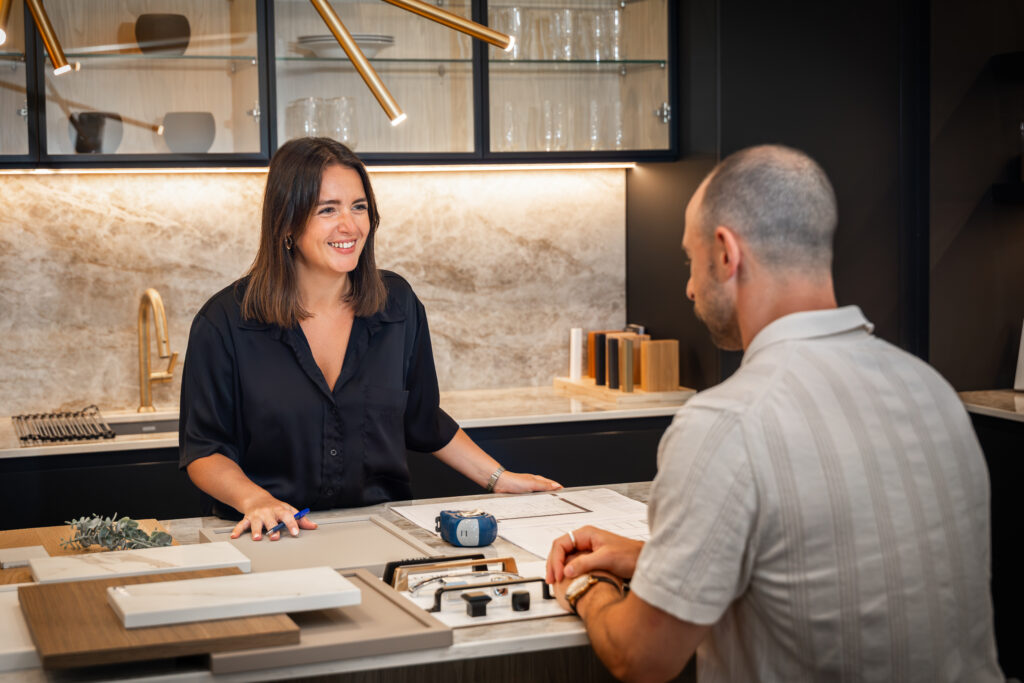
First question: how do you use your kitchen?
Before we even look at samples, I want to understand what daily life looks like.
- Is this a kitchen that gets heavy use?
- Are there young children at home?
- Do you cook every day?
- Do you entertain often?
Those answers can tell us far more than the latest design trend. A material can look beautiful in a showroom and still prove impractical once it has to keep up with your routine.
Durability means different things to different people
We tend to associate durability with physical resistance: scratches, moisture, stains and everyday wear.
That is certainly part of it. Longevity also has a visual side. You want materials you’ll still enjoy looking at several years from now.
Some colours and finishes have a very specific moment in design. Others have more staying power. Finding the right balance between performance and aesthetics helps a kitchen age more gracefully.
Countertops have a major impact on everyday life
Your countertop is one of the hardest-working surfaces in the kitchen, so I always ask clients how much maintenance they’re comfortable with.
Dekton is one of the materials we frequently recommend because of its technical properties, including resistance to heat, stains, and scratches. Those characteristics make it particularly interesting for a surface that sees daily use.
Quartz also remains an excellent option. Its wide range of colours and finishes gives us a lot of flexibility when developing the overall look of the kitchen.
Other materials can work very well too, depending on the project. Each has its own characteristics, and understanding those before making a decision can prevent a beautiful choice from becoming an everyday frustration.
I usually ask clients to think through a few practical questions:
- Do you cook every day or only occasionally?
- Are there young children at home?
- How much maintenance are you comfortable with?
- Are you willing to follow certain care precautions?
- How do you prioritize appearance, durability and ease of maintenance?
- Does the kitchen receive a lot of natural light?
- Are you looking for something timeless or more trend-driven?
- What is the overall budget for the project?
Together, those answers give us a much clearer direction.
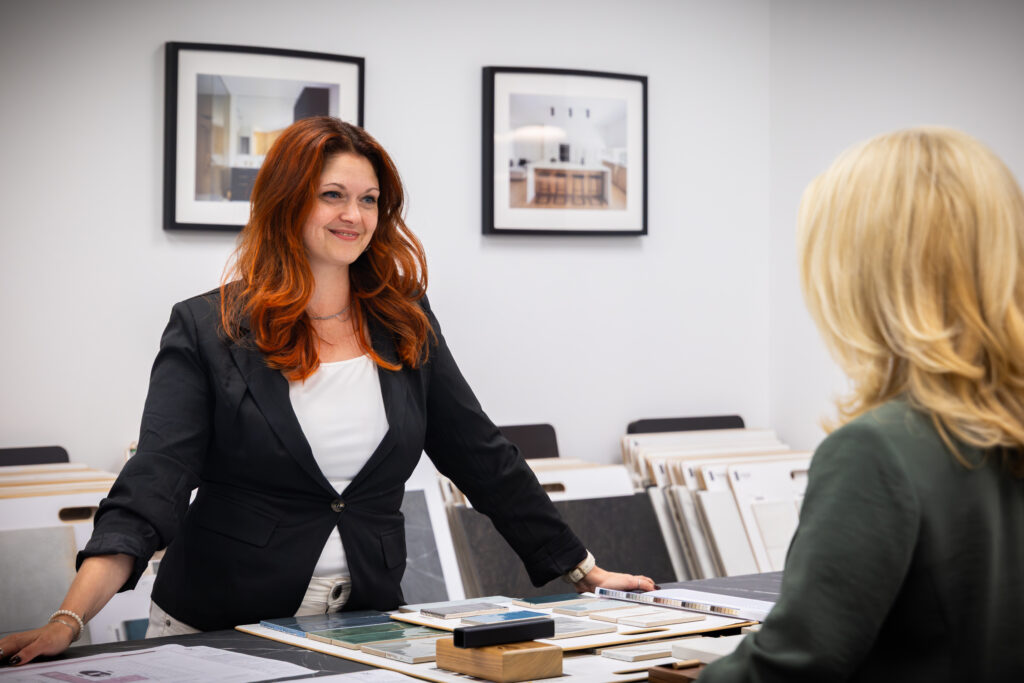
Cabinetry has to hold up visually too
Cabinetry takes up a significant amount of visual space, which makes its material, finish and colour especially important.
As a designer, I generally favour a strong, timeless foundation that can evolve along with the home. Neutral shades, natural textures and quality materials tend to offer more flexibility when the time comes to refresh the space a few years down the road.
A change in lighting, hardware, or accessories can then give the kitchen a different feel without requiring major work.
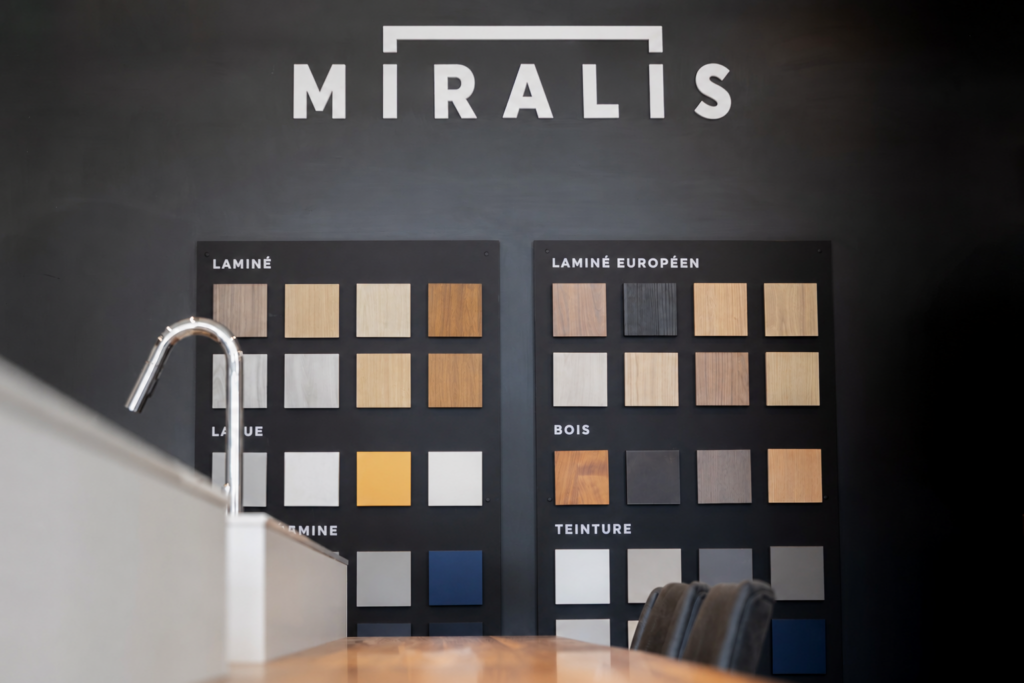
Groupe 3R Showroom in Brossard
Wood and natural textures age well
Wood, stone-inspired textures and authentic materials continue to feature prominently in the kitchens we design.
They bring warmth, character and a sense of permanence to a space. When used well, they also tend to work comfortably alongside changing colours, finishes and styles over the years.
That makes them especially useful when the goal is to create a kitchen that feels personal without becoming overly tied to one design moment.
Maintenance is easy to underestimate
This is one of the topics we discuss most often during consultations.
Some surfaces are very easy to care for. Others need more regular attention to maintain their appearance. The important part is understanding what the material requires before committing to it.
A surface that works beautifully for one household may feel demanding in another. Daily routines, cooking habits, and tolerance for maintenance all play a role.
Choosing with the whole kitchen in mind
Material selection involves several decisions happening at once: budget, aesthetics, maintenance, durability, and lifestyle.
That’s why we approach it as part of the overall design process.
At Groupe 3R, our role is to guide clients through the options, explain the practical differences between them, and help build a material palette that makes sense for the project as a whole.
The goal is to create a kitchen whose materials continue to look good, perform well, and feel right long after the renovation is finished.