
5 Things a Designer Notices in a Kitchen in Under 30 Seconds
Beyond colours, materials and trends, designers develop a very particular way of looking at a space.
Emma, a designer at Groupe 3R, works with homeowners to create kitchens that fit the way they actually live. After years of visiting, designing and transforming spaces, certain details immediately catch her eye when she walks into a kitchen.
And they’re not necessarily the most expensive or trendiest features in the room.
Here are the five things she notices within the first 30 seconds.
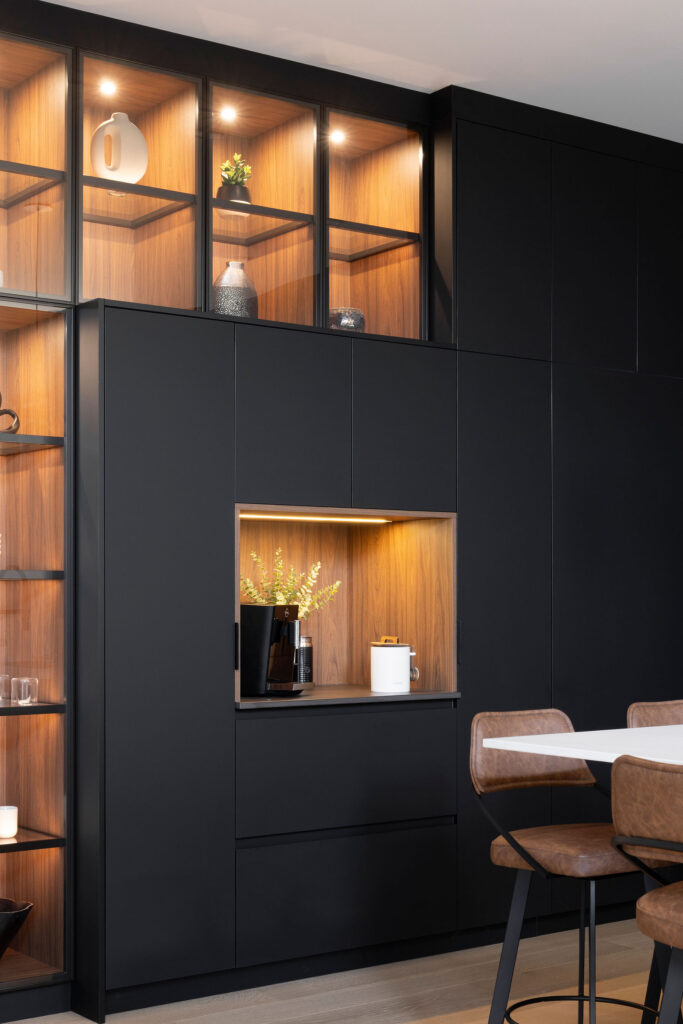
1. Lines and alignment
“It’s usually the first thing I notice.
Are the cabinets properly aligned? Do the openings create visual continuity? Do the appliances feel naturally integrated into the space?
In a well-designed kitchen, your eye moves easily from one element to the next. Nothing feels out of place or forced. That sense of balance creates an immediate impression of order and harmony, which has a real impact on how you perceive the quality of the space.
On the other hand, just a few awkward alignments can make a kitchen feel off, even when it’s finished with high-end materials.”
2. The light and how it shapes the space
“Sure, a beautiful kitchen is about the materials you put into it. But it’s also about how you light them.
I always look at how natural light enters the room and how artificial lighting takes over throughout the day.
The most successful projects usually combine several sources of light: general lighting, task lighting, and a few accent lights that create a warmer atmosphere.
When lighting is considered from the very beginning, materials gain more depth, and the whole space naturally feels more inviting.”
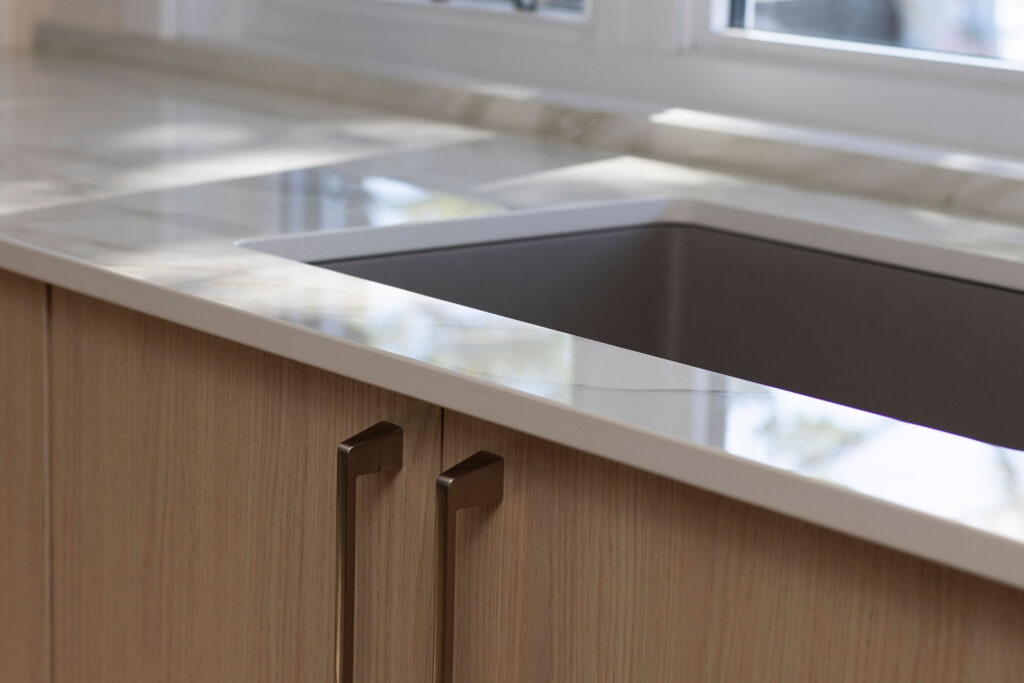
3. Do the materials speak the same language?
“Luxurious materials shouldn’t be the sole focus of a great kitchen. What matters even more is how well these materials work together.
Wood, quartz, metal finishes and colours should complement one another rather than compete for attention. When textures and tones come together naturally, the entire kitchen feels more refined and timeless.
In recent years, natural materials and wood finishes have brought more warmth into contemporary kitchens. Used thoughtfully, they add character without sacrificing a sense of lasting elegance.”

4. The transitions reveal the attention to detail
“This is probably one of the most revealing parts of a project.
I always pay attention to transitions: where the countertop meets the backsplash, how finishing panels are handled, how materials wrap around an edge, or how everything lines up around the appliances.
When these details are done well, you barely notice them. But they make a significant difference in the overall quality of a kitchen.
Clean transitions make every element feel like it belongs exactly where it is, creating a much more seamless space.”
5. Are the proportions balanced?
“A kitchen can look beautiful on paper and still lose some of its impact if the proportions don’t suit the space.
The size of the island, the height of the cabinetry, the scale of the lighting fixtures, and even the choice of hardware all influence the room’s visual balance.
The most comfortable kitchens are often the ones where nothing feels too imposing or too understated. Every element seems to occupy exactly the right amount of space.
That’s what creates the sense of harmony you notice almost immediately.”
The real secret to a well-designed kitchen
A beautiful kitchen comes down to more than finishes and materials.
It’s in the way every element relates to the next. Cabinetry lines up precisely. Lighting sits where it serves a purpose. Materials complement one another. Transitions feel clean, and the proportions of the room feel balanced.
None of these decisions draws much attention on its own. But when they’re considered together, the entire kitchen feels more resolved.
That level of detail shapes more than the appearance of a space. It shapes how the kitchen feels to live in and how naturally it works.