
Dark Countertops: Beautiful, but Are They Right for You?
Dark countertops have become a popular choice in contemporary kitchens. Elegant, sophisticated, and timeless, they can give a space real character and create a striking visual impact.
But before falling for their refined look, there’s an important question to ask: do they actually suit the way you live?
As with many renovation decisions, it’s about finding the right balance between aesthetics, functionality, and everyday maintenance.
Here’s what to consider before choosing a dark countertop.
Are dark countertops harder to maintain?
Generally speaking, dark countertops require a little more attention if you want to keep them looking spotless.
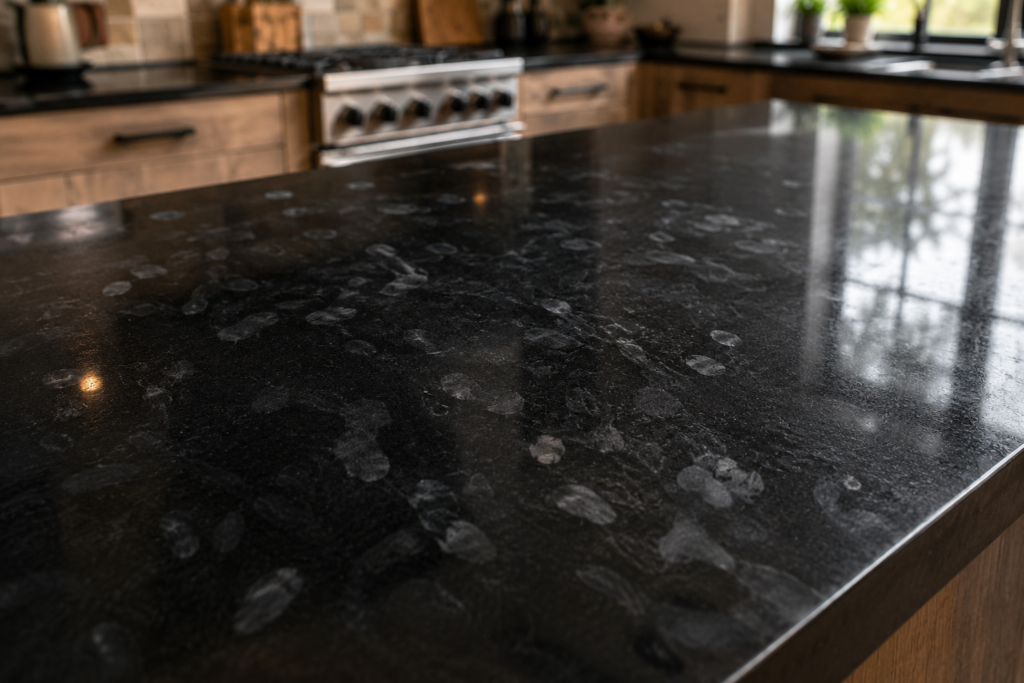
Contrary to what you might expect, darker surfaces can make some of the little signs of everyday life more noticeable, including:
- Fingerprints
- Dust
- Soap residue
- Water spots
- Crumbs and lighter-coloured particles
That doesn’t mean they’re difficult to live with. They may simply need to be wiped down more often to maintain a clean, even appearance.
For families with young children or anyone with a kitchen that gets a lot of daily use, it’s worth factoring this into the decision from the start.
How does a dark countertop affect the brightness of a kitchen?
Dark colours absorb more light than lighter surfaces.
In a bright kitchen, that can help create a warm, sophisticated atmosphere. In a smaller space or one with limited natural light, however, a dark countertop can make the room feel visually heavier.
Before making your choice, consider:
- How much natural light the room gets
- The room’s orientation
- The colour of the cabinetry
- The type of lighting you’re planning
A dark countertop can look stunning when it’s part of a well-balanced palette and the contrasts throughout the room are carefully considered.

Why do some dark countertops show marks more easily?
It comes down to more than colour. The material and finish matter too.
Highly polished surfaces tend to make fingerprints, water spots and small everyday marks more noticeable. Some matte or textured finishes, on the other hand, can be more forgiving.
That’s why choosing a countertop shouldn’t come down to colour alone. The finish also needs to work with the way you use your kitchen.
A family that cooks several times a day, for example, will have different priorities than a couple that uses the kitchen less frequently.
Which materials work best for dark countertops?
Not every material behaves the same way in darker colours.
Dekton
Known for its resistance to scratches, heat, and stains, Dekton is a strong option for busy kitchens.
Natural stone
Granite and other dark natural stones offer a distinctive, timeless look. Depending on the specific stone, however, they may require more maintenance.
Quartz
Quartz remains a popular choice thanks to its durability and relatively low maintenance. With some very dark colours, fingerprints and water residue can be more noticeable depending on the finish.
Laminate
Today’s laminates come in an impressive range of colours and textures. They can be an interesting way to achieve the look of a dark countertop at a more accessible price point.
Ultimately, the right material depends on your lifestyle, your budget and how much maintenance you’re comfortable with.
Are there alternatives to dark countertops?
Absolutely.
If you like the depth and character of darker tones but aren’t sure you want to live with some of the trade-offs, there are plenty of alternatives worth considering.
Stone-look surfaces with pronounced veining, medium greys, taupes, and concrete-inspired finishes can add visual depth without going quite as dark. Their patterns and tonal variations can also make everyday marks less noticeable.
Another option is to introduce darker tones elsewhere in the kitchen, perhaps on the island, through the fixtures or in selected design details.
You still get that sophisticated contrast while keeping the overall kitchen brighter and potentially easier to maintain.
So, is a dark countertop a good choice?
Yes, as long as it works for the way you live.
Dark countertops stand out for their elegance and visual presence. But maintenance, lighting, and how readily the surface shows everyday marks should all be part of the decision.
The best kitchen is the one designed around the people who actually use it.
At Groupe 3R, we believe those decisions should be made with your habits, your space, and your preferences in mind. That’s how you choose a countertop you’ll enjoy living with, not just looking at, for years to come.
Dark Countertop FAQ
Do dark countertops get dirty more easily?
Not necessarily. They can simply make certain marks more visible, including water spots, dust, and fingerprints. How noticeable they are depends largely on the material and finish.
What is the best material for a dark countertop?
The choice of material depends on your lifestyle, your budget, and the level of maintenance you prefer. For a dark countertop that’s particularly durable and easy to maintain in everyday use, Dekton stands out for its resistance to stains, scratches, and heat.
Can you use a dark countertop in a small kitchen?
Yes. With enough light, a dark countertop can create an elegant contrast and add plenty of character, even in a smaller kitchen.
Does black quartz show fingerprints?
Some polished surfaces can make fingerprints more noticeable. Matte and textured finishes tend to be more forgiving.
How should you clean a dark countertop?
For most surfaces, a soft cloth, warm water, and a non-abrasive cleaner are enough. Avoid overly aggressive cleaning products.
What cabinet colours work with dark countertops?
White, beige, greige and natural wood cabinetry can all create an attractive contrast while helping the room retain a sense of brightness.
Are dark countertops still in style?
Yes. Dark countertops have remained popular across both contemporary and more traditional kitchens, in part because they can create a strong yet timeless look.
How do I know if a dark countertop is right for me?
Start with your lifestyle rather than the look alone. Consider how much maintenance you’re comfortable with, how much light your kitchen receives, and how heavily the space is used. If those factors line up with your expectations, a dark countertop can be a great fit.